Choosing the location of a large aquarium is about more than finding the best wall.
Before an aquarium is fabricated, one of the most important questions is surprisingly simple:
Can we actually get it there?
A tank may fit perfectly into a room on paper, but getting a large glass or acrylic structure into that room can present an entirely different challenge.
Can the aquarium be delivered in one piece?
For larger installations, we assess the entire delivery route.
This can include building entrances, loading areas, lifts, staircases, corridors, doorways, ceiling heights and turning spaces.
If a completed aquarium cannot physically reach its final position, there may be an alternative approach: fabrication or assembly within the property.
This needs to be determined before manufacturing begins, not after.
The aquarium becomes part of the interior
Large aquariums can be used in many ways.
They can divide open-plan spaces without creating a solid wall. They can be built into feature walls, positioned beneath architectural openings or designed as a centrepiece around which the rest of the interior is arranged.
The aquascape itself then becomes part of the interior composition.
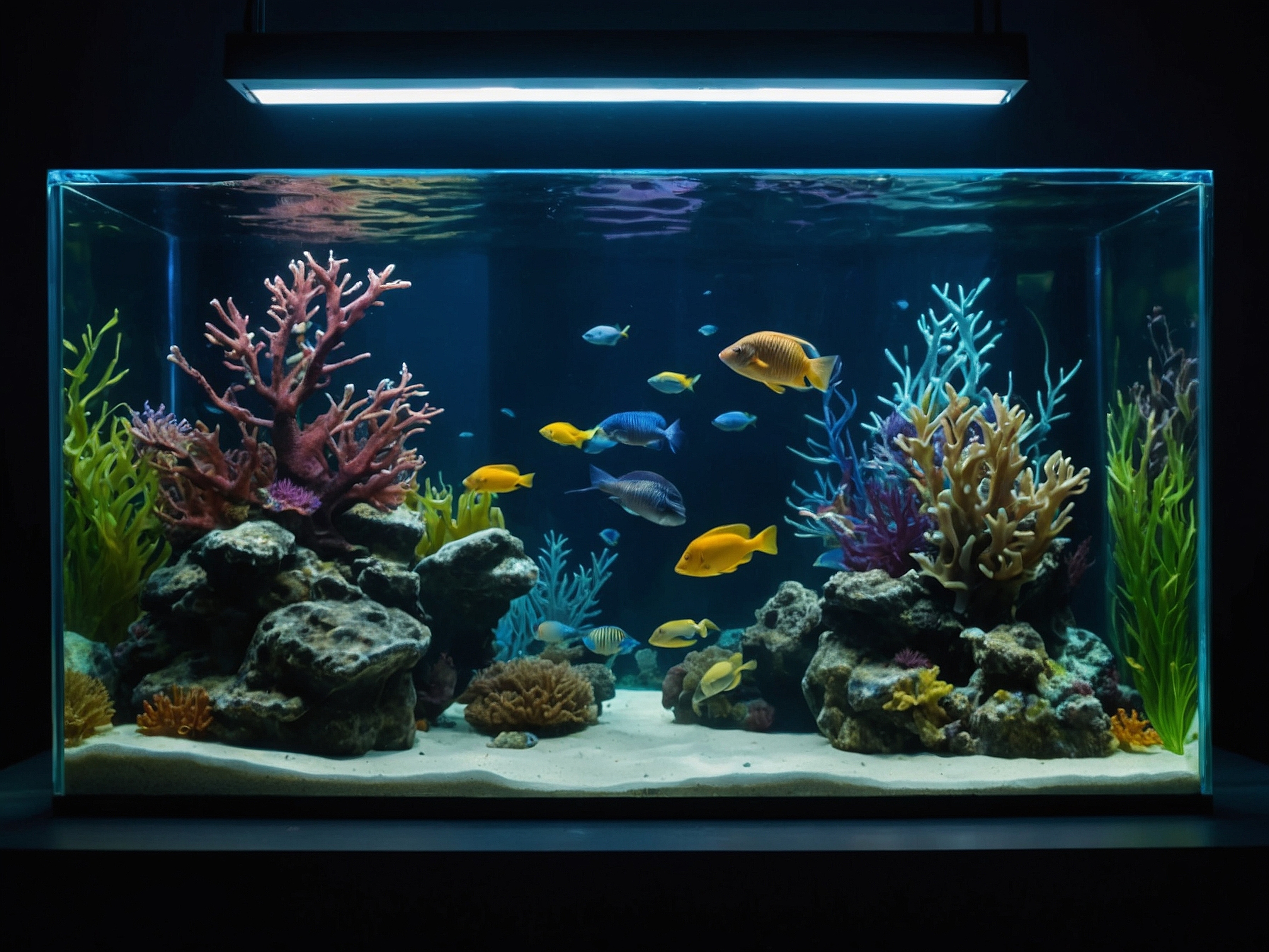
Rock structures, coral placement, negative space, lighting and even the movement of fish all contribute to how the aquarium is experienced.
Structural considerations
Once the aquarium reaches its destination, the building itself becomes part of the conversation.
A large aquarium can contain thousands of litres of water, creating substantial loads.
The weight of the water is only part of the calculation. The tank, stand or support structure, rockwork, substrate and equipment also contribute.
The aquarium’s position and support therefore need to be considered alongside the architecture of the property.
Water needs somewhere to go
Maintenance involves water.
Large aquariums may require regular water changes, equipment servicing and emergency intervention, so drainage and waste-water management should be considered during the design stage.
A properly planned system can make routine maintenance significantly easier and reduce the risk of accidental water discharge.
What happens when the equipment needs servicing?
This is often overlooked.
The aquarium may look perfect when newly installed, but what happens when a return pump needs replacing? Can the sump be reached? Can filtration media be removed? Can lighting be serviced?
A professional installation should allow technicians to access the critical components without having to dismantle the aquarium or disturb the surrounding architecture.
Designing for the entire life of the aquarium
The installation is only the beginning.
A bespoke aquarium should be designed around its entire lifecycle, from delivery and installation to maintenance, equipment replacement and eventual upgrades.
That is why we consider, access, structure, drainage and maintenance before fabrication.
Because the best place for an aquarium is not simply where it looks best.
It is where it can be safely delivered, properly installed and successfully maintained for years to come.