Temperature is one of the quiet variables that can determine whether a marine aquarium thrives or struggles.
In a small aquarium, temperature changes can happen quickly. In a large reef system, the situation is different—but the amount of equipment generating heat can be considerable.
Lighting, pumps, UV systems and other equipment all contribute to the thermal load of an aquarium.
It isn’t just about the room temperature
A large reef aquarium can generate significant heat through its own life-support equipment.
High-output lighting, powerful circulation pumps and return pumps can gradually increase water temperature, particularly in warm climates.
This is why temperature control needs to be considered as part of the aquarium’s engineering rather than added later.
Chillers need to be properly sized
A chiller should not simply be selected according to aquarium volume.
The calculation should consider the aquarium’s temperature target, ambient room temperature, lighting, equipment and the amount of heat being transferred into the water.
Oversimplifying this calculation can result in a system that struggles during the hottest periods of the year.
Evaporation is part of the equation
Open reef aquariums can also lose a significant amount of water through evaporation.
The water disappears, but the salt does not.
As a result, evaporation can gradually increase salinity if freshwater is not automatically replaced.
An automatic top-off system using purified freshwater helps maintain a stable water level and salinity.
Humidity matters too
Large aquariums do not only affect themselves.
Thousands of litres of warm, moving water can introduce moisture into the surrounding environment. In enclosed rooms, this can influence humidity and the performance of the building’s HVAC system.
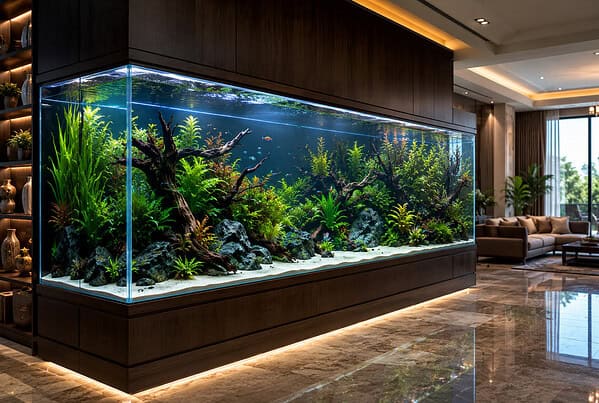
Aquarium design should therefore consider the relationship between the tank and the room around it.
Stability is the goal
For marine livestock, the objective is not simply to achieve a particular temperature once.
It is to maintain a stable environment with minimal unnecessary fluctuation.
Temperature monitoring, properly sized cooling equipment, reliable circulation and appropriate HVAC planning all contribute to that stability.
In a luxury aquarium, climate control is not an accessory.
It is part of the life-support system