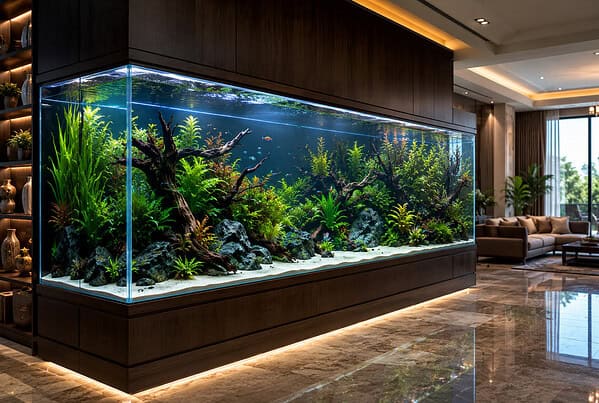
There’s a shift happening inside Dubai’s most thoughtfully designed homes. Where oversized canvases and framed prints once anchored a room, living aquatic installations now hold that space. Not as a novelty. Not as a hobby tucked into a corner. As a deliberate, central design decision.
This is the natural outcome of two converging forces: the UAE’s growing appetite for biophilic design, and a new generation of aquascaping that treats underwater composition with the same rigour as architecture.
What Is Aquascaping?
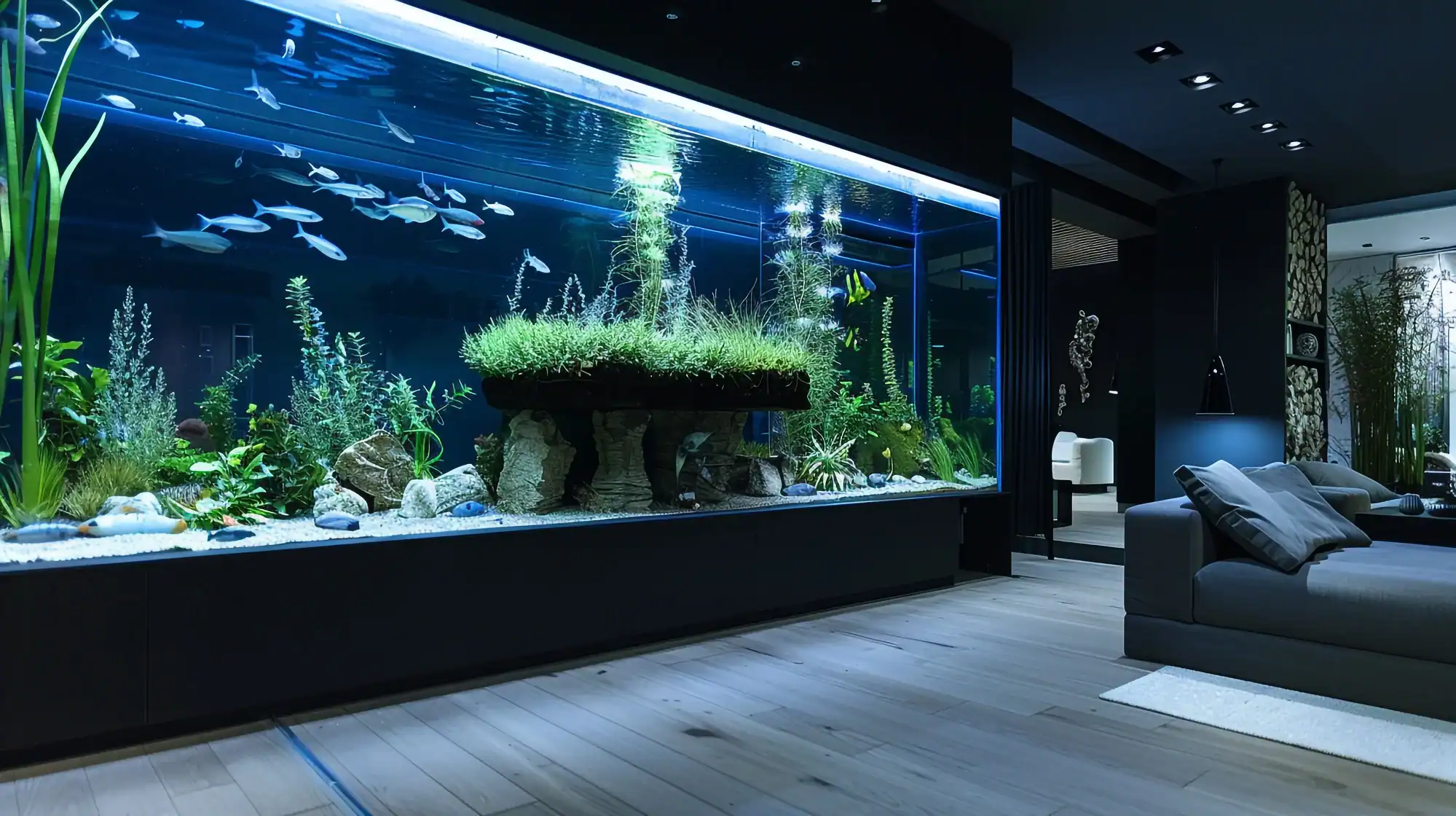
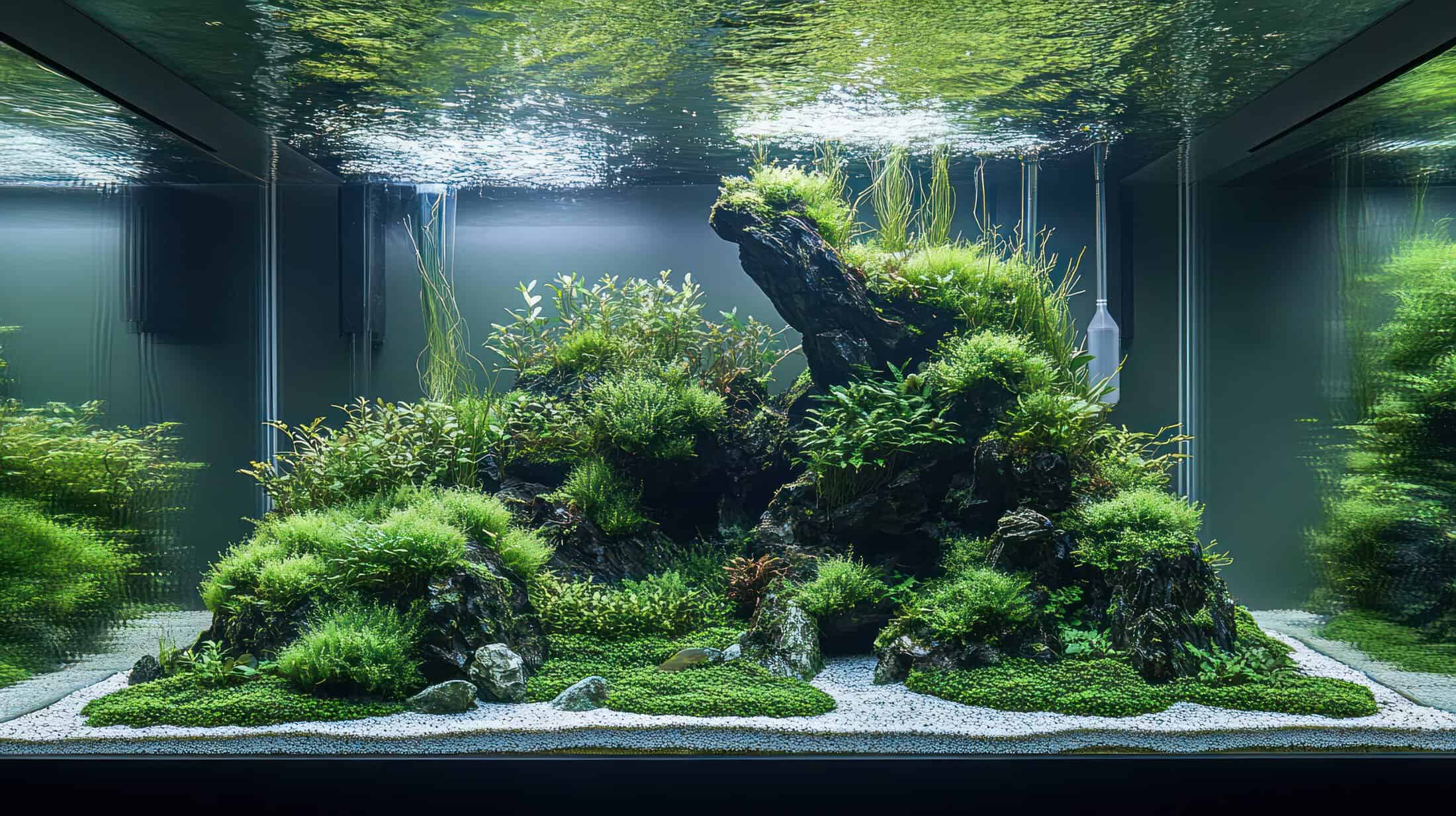
Aquascaping is the art of composing natural landscapes within an aquarium. It involves arranging stone, driftwood, living plants, mosses, and sometimes coral to create scenes that evoke forests, valleys, riverbanks, or reef slopes. At its best, it borrows from the same principles that guide landscape architecture: scale, proportion, negative space, depth of field, and colour theory.
The difference is that an aquascape is alive. It grows. Light shifts across it throughout the day. Fish move through it. Plants pearl with oxygen. No painting does that. No sculpture changes with the seasons.
Why Dubai, and Why Now?
Biophilic design has moved from a niche philosophy to a defining force in UAE interiors. In a city where the climate keeps most of life indoors for a significant part of the year, the desire to reconnect with natural elements inside the home is visceral, not decorative.
The trend has matured beyond potted plants and vertical gardens. Designers and homeowners are now looking for natural elements that carry real depth: living systems that introduce water, movement, light refraction, and ecological complexity into a space. Aquascapes and custom aquariums sit at the precise intersection of this demand.
Dubai’s design culture also values precision and craftsmanship, qualities that high end aquascaping shares. A well executed aquatic installation requires the same coordination between designer, engineer, and specialist that a bespoke kitchen or custom lighting scheme demands.
What a Living Installation Does That Traditional Art Cannot
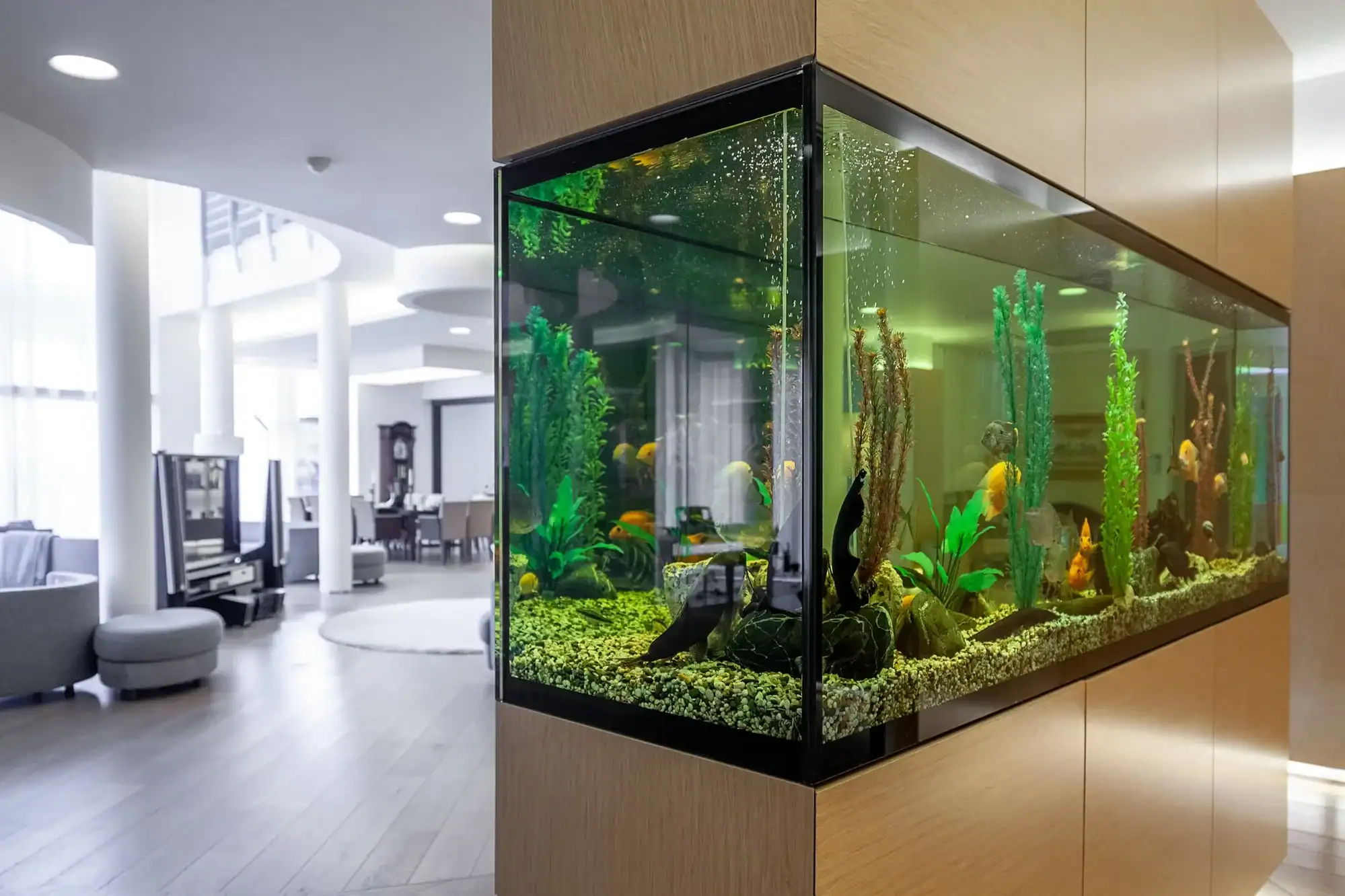
A framed painting is static. Even a rotating collection of art eventually becomes background. An aquatic installation, by contrast, is irreducibly present. It commands attention without demanding it.
Movement without mechanics. Fish gliding, plants swaying in a gentle current, light refracting through water. These are organic movements that our nervous system reads as calming rather than stimulating. Research supports this: studies have found that observing a stocked aquarium can lower blood pressure and reduce heart rate within minutes.
Dynamic light. Water is a natural light diffuser. A well lit aquarium throws soft, shifting reflections across adjacent walls and ceilings, creating an ambient quality that no lamp or LED strip can replicate.
Depth in a flat plane. Through careful arrangement of foreground, midground, and background elements, a skilled aquascaper can make a 120 centimetre tank feel like a view into a world far larger than itself.
Seasonal evolution. A planted aquascape changes over weeks and months. Stems fill in. Mosses carpet the hardscape. Fish colours deepen. The installation you see in January will look different by June.
Where It Works Best
The most successful living installations are integrated into the architecture, not placed against it.
Room dividers. A freestanding aquarium between a living area and dining space creates visual separation without closing off sightlines. Light passes through the water, connecting the two zones while giving each its own character.
Feature walls. A built in aquarium flush with the wall replaces the traditional accent wall. When framed by clean joinery and supported by concealed filtration, the result is seamless.
Home offices. Research on aquarium therapy consistently highlights benefits in high stress environments. A desktop or wall mounted aquascape in a workspace is a functional tool for focus and recovery during long working hours.
Hospitality and commercial spaces. Restaurants, hotel lobbies, medical clinics, and retail spaces across the UAE are increasingly commissioning aquatic installations for the measurable effect they have on how people feel inside those spaces.
The Design Principles That Matter
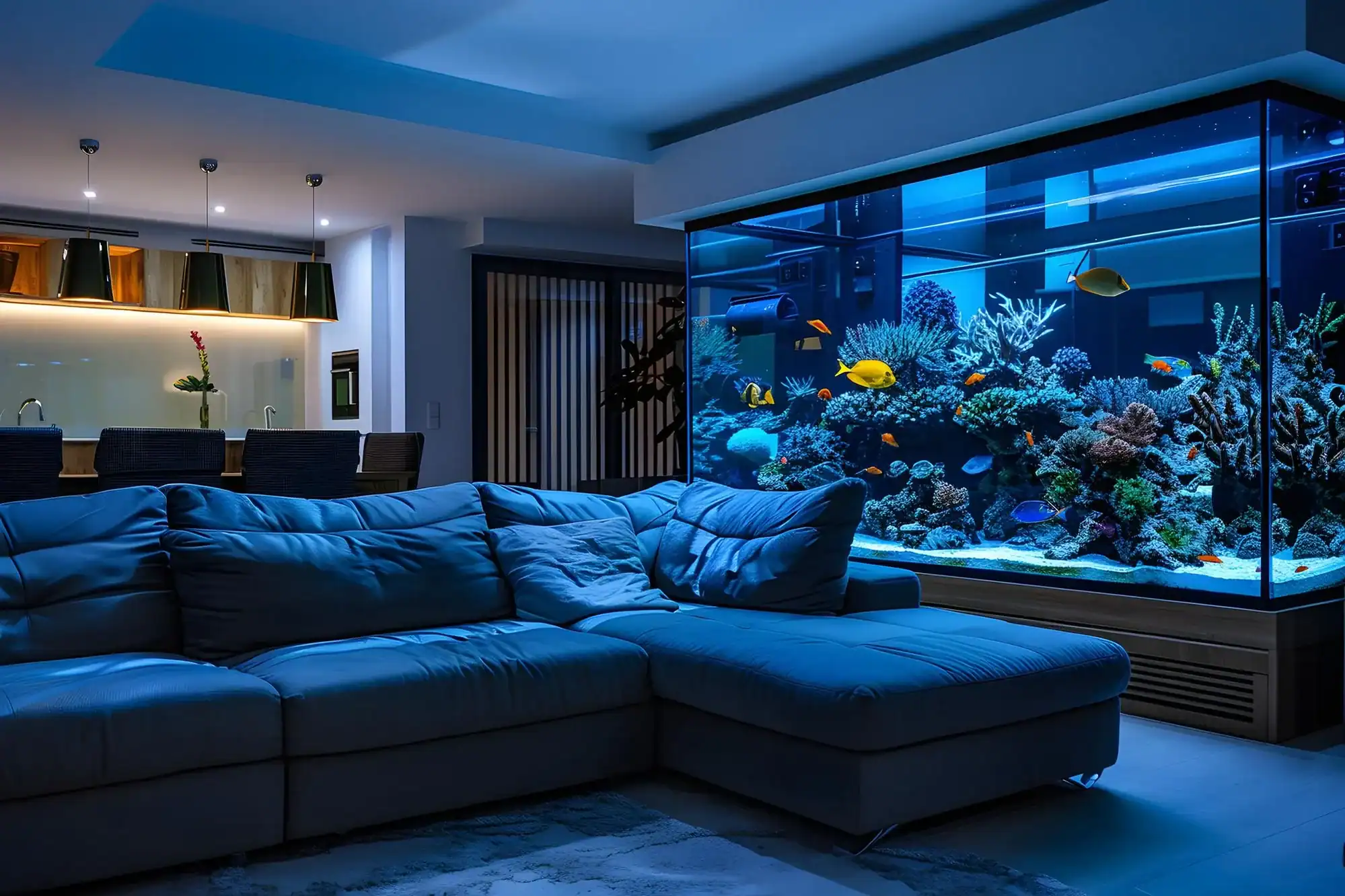
Not every aquarium is an aquascape, and not every aquascape works as interior design. The installations that succeed in high end spaces share a few characteristics.
Intentional negative space. The global aquascaping trend for 2026 leans towards restraint. Minimalist layouts use open sand, strategic rock placement, and breathing room to let individual elements speak.
Material harmony. The hardscape inside the tank should complement the materials outside it. Seiryu stone pairs naturally with grey marble flooring. Warm driftwood tones echo timber ceiling soffits. When the aquascape feels like an extension of its surrounding architecture, the effect is cohesive and grounded.
Lighting that integrates. The lighting inside the aquarium should feel like part of the room’s overall lighting plan. Colour temperature, intensity, and timing can all be calibrated to complement the home’s lighting scheme.
Before You Commission
A living installation is not a purchase. It is a partnership. Unlike a painting you hang and forget, an aquatic system requires ongoing care: water chemistry management, equipment maintenance, plant trimming, and livestock health monitoring.
The best installations are those where the engineering is invisible. Filtration is concealed. Plumbing is integrated into cabinetry. Equipment access is planned during the design phase, not improvised after installation. When this infrastructure is handled properly, the owner experiences only the beauty.
A New Kind of Statement Piece
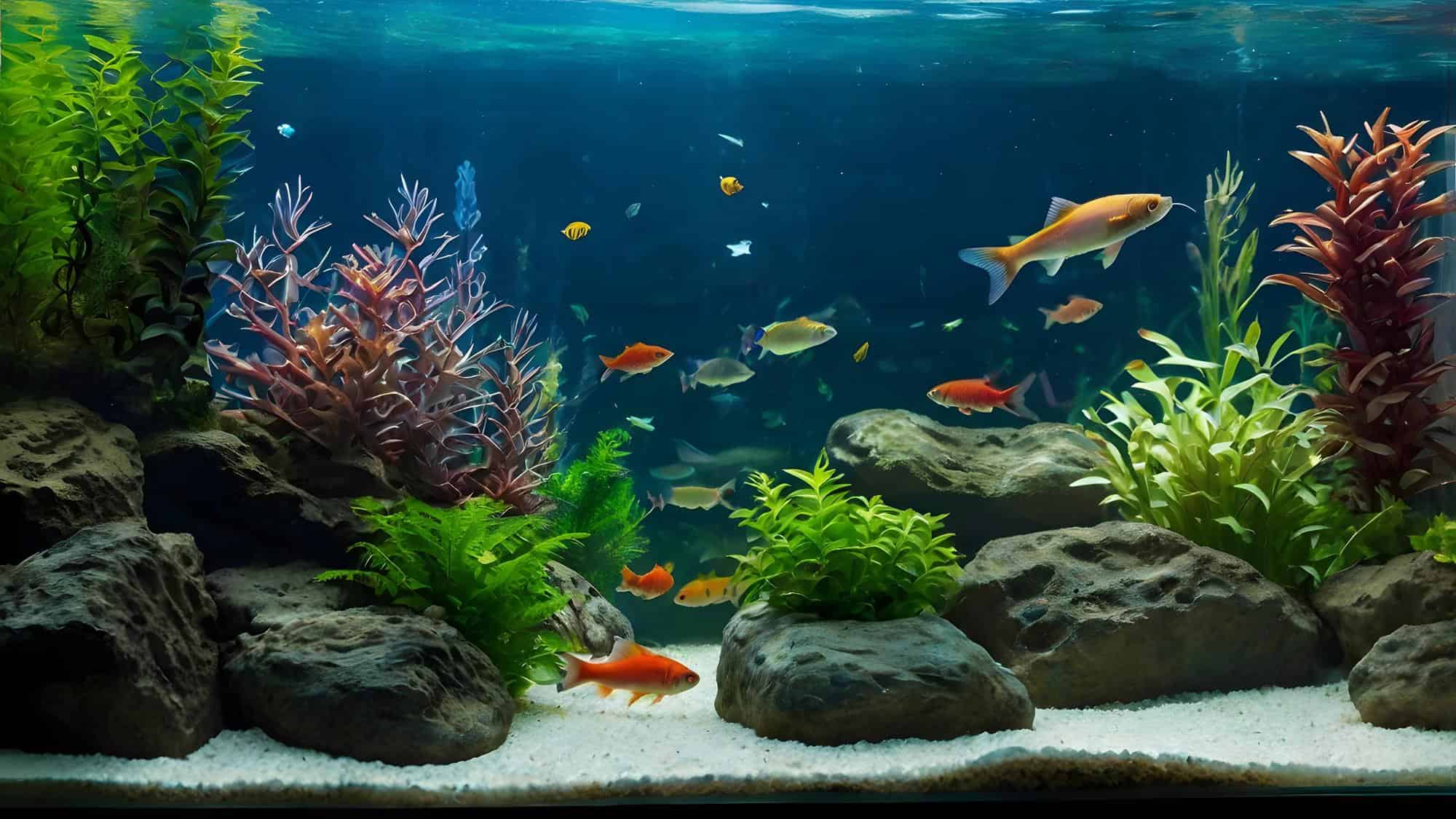
The homes that define Dubai’s design landscape in 2026 are not the ones with the most expensive furniture or the most dramatic lighting. They are the ones that feel alive. A living aquatic installation introduces nature at its most dynamic into the heart of a home. Done well, it does not compete with the interior design. It completes it.
At Nature’s Nook, we design, build, and maintain living aquatic environments for homes, offices, and public spaces across the UAE. If you are considering a living installation for your space, we would welcome the conversation. Contact us Today