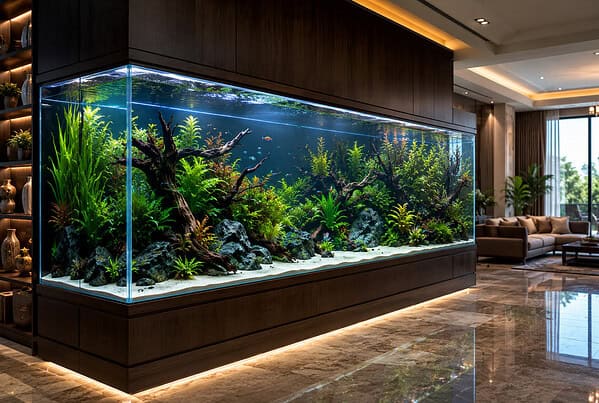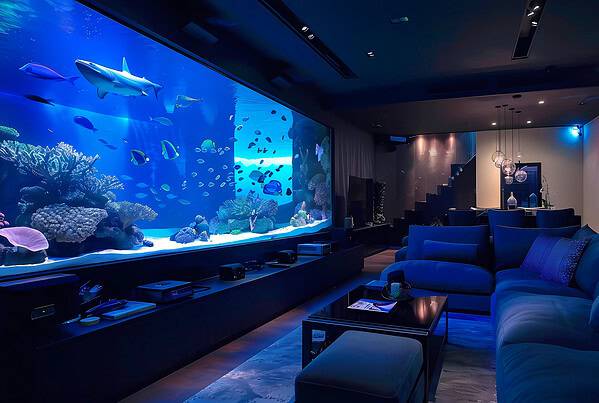
A bespoke aquarium is not the place to choose the cheapest option at every stage.
It may be possible to reduce an initial quotation by selecting lower-cost materials, simplifying the support structure or using less sophisticated equipment. On paper, the result may look almost identical to a higher-specification installation.
But an aquarium is a little like a high-performance car.
Two cars may look similar from the outside, yet the difference between them can be found in the quality of the engine, braking system, suspension, electronics and materials used beneath the bodywork. The cheaper car may drive perfectly on its first day. The real difference appears later, under repeated use, changing conditions and long-term stress.
A large aquarium is no different.
It is a permanent structure holding thousands of litres of water, often within a living space where people work, relax and spend time every day. Its glass or acrylic, support frame, reinforcement, bonding materials, plumbing, filtration and electrical systems all need to perform reliably over many years.
The hidden cost of cheaper materials
Cost-cutting can be difficult to identify when an aquarium is newly completed.
The glass may look clear. The silicone may appear neat. The pumps may be running quietly. The filtration may be producing clean water.
However, the initial appearance does not always reveal how those materials will perform after years of continuous loading, humidity, temperature changes, maintenance and biological activity.
This is particularly important for laminated glass aquariums, where the quality of the PVB interlayer matters alongside the glass itself.
An inferior or unsuitable PVB may initially produce an acceptable visual result, but over time it can be more vulnerable to optical deterioration, including clouding, as well as changes in its physical performance. In a large aquarium, where the glass is exposed to constant hydrostatic pressure, long-term material behaviour is far more important than how the tank looks on installation day.
The same applies to the silicone bonding system.
Silicone is not merely a neat finishing line between panes of glass. It forms part of the aquarium’s structural assembly, and its formulation, compatibility, preparation, application and curing all matter.
Poor-quality silicone or inadequate workmanship may not reveal its limitations immediately. The aquarium may appear perfectly sound at first, while the bonding system is being subjected to continuous load and environmental exposure.
It is not only about glass and silicone
The same principle applies throughout the installation.
A cheaper support frame may not provide the same rigidity or load distribution as a properly engineered structure. Inadequate reinforcement can affect the long-term behaviour of the aquarium. Undersized plumbing can restrict flow and place unnecessary strain on pumps. Lower-quality pumps, sensors or control equipment may increase the likelihood of failure and require more frequent replacement.
Even filtration should not be selected simply because a specification sheet appears to match the volume of the aquarium.
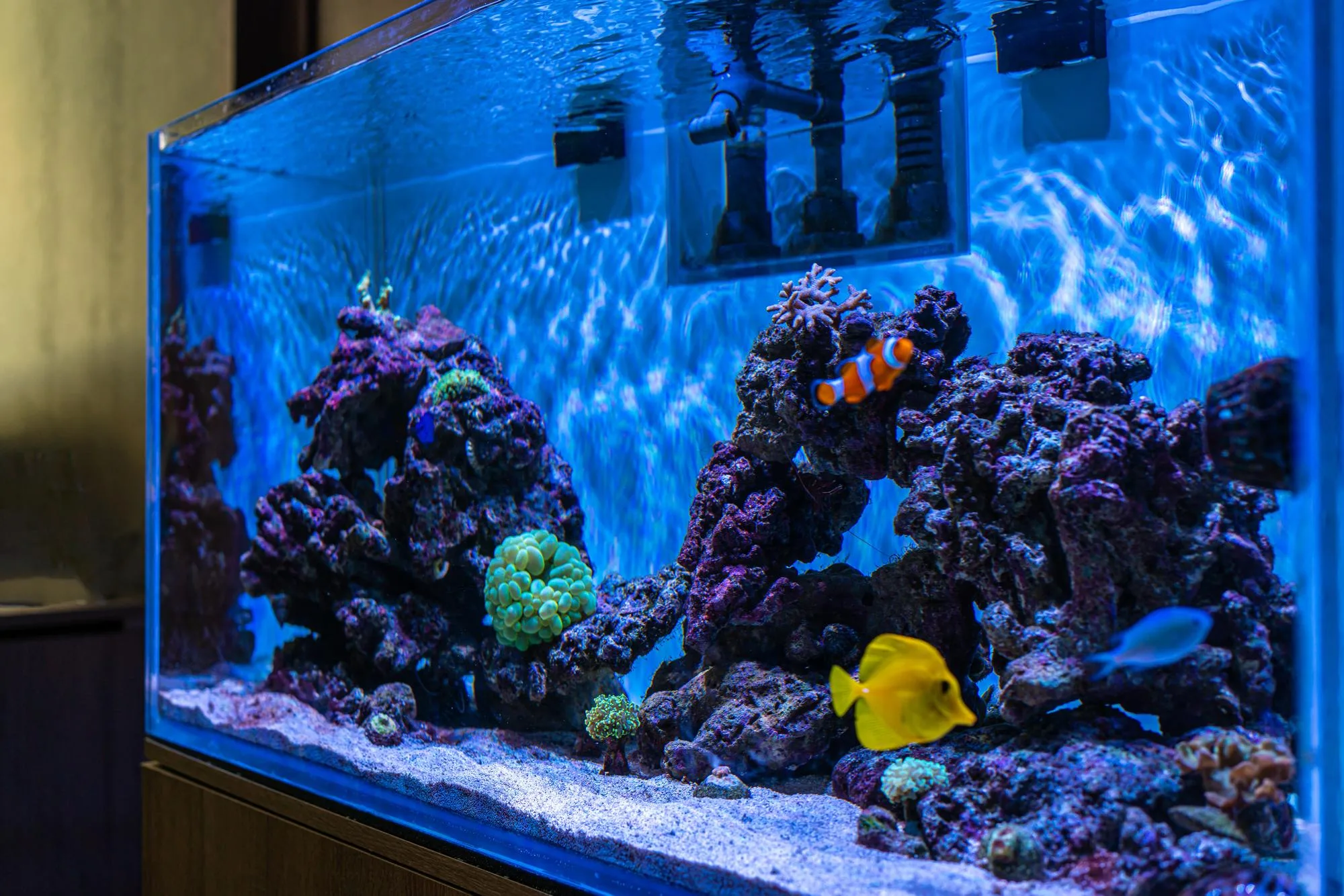
A high-end reef system may require greater biological capacity, circulation, oxygenation and nutrient export than a basic calculation suggests. Choosing equipment solely on the lowest purchase price can result in higher running costs, poorer stability and expensive upgrades later.
The false economy of saving at the beginning
The cheapest option is not always the most economical option.
Replacing a pump is one thing. Replacing a bonded aquarium, repairing water damage or losing established livestock is something else entirely.
A lower initial cost can also create ongoing compromises. Equipment may be harder to service, access may be restricted, energy consumption may be higher and future upgrades may become more complicated.
This is why we consider the full life of the aquarium rather than only the installation budget.
The right question is not:
What is the cheapest material or component that will work today?
It is:
What specification will provide the appropriate performance, safety and reliability for the intended application?
Where value engineering belongs
There are sensible ways to manage a project budget.
Dimensions can be reviewed. Features can be prioritised. Finishes can be selected carefully. Automation can be introduced in stages. The design can be refined to achieve the desired visual impact without adding unnecessary complexity.
But the fundamental structure and life-support systems should not be weakened simply to reduce the initial quotation.
The glass, acrylic, PVB, silicone, reinforcement, support frame, plumbing, filtration, pumps and control systems all need to be selected according to the demands of the aquarium.
The primary structure is not where cost-cutting belongs.
A luxury aquarium should not be judged only by how impressive it looks when it is first filled. It should be judged by how safely, reliably and efficiently it continues to perform years later.
The objective is not to build the least expensive aquarium that works.
It is to build an aquarium that remains structurally sound, optically clear, biologically stable and practical to maintain throughout its intended service life.